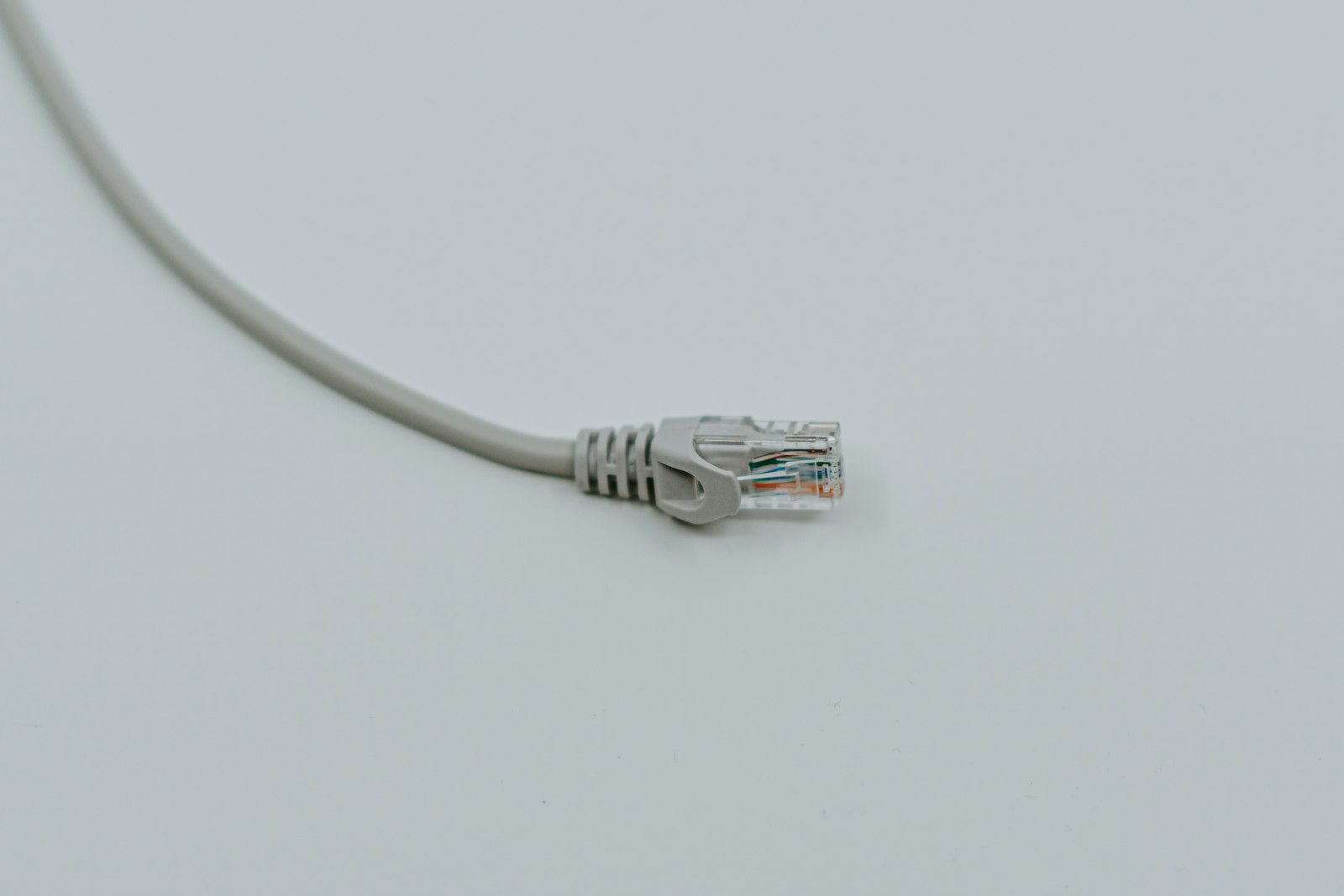
If you're wiring an office — new construction, a renovation, or just replacing a rat's nest of old cabling — the category of Ethernet cable you buy in bulk determines what your network is capable of for the next decade, since nobody wants to re-pull cable through walls twice. Here's the practical difference between the three categories you'll actually run into.
Cat5e: legacy, and mostly worth skipping now
Cat5e supports Gigabit Ethernet reliably and was the standard for a long time. The problem is that it's barely cheaper than Cat6 today, and it caps out well below what a modern network needs if you ever want multi-gigabit speeds to a desk or access point. Unless you're extending an existing all-Cat5e installation, there's little reason to pull new Cat5e in 2026.
Cat6: the current sweet spot for most offices
Cat6 supports Gigabit Ethernet at full 100m runs, and 10 Gigabit Ethernet at shorter runs (typically up to about 55m, less in electrically noisy environments). For most office wiring — runs from a comms closet to desks and access points — this is the practical standard right now: meaningfully more capable than Cat5e, without the cost and stiffness of Cat6a.
For a full office wiring job, the Cable Matters Cat6 Bulk Cable, 1000ft spool is a solid choice — UL listed, solid bare copper conductors (not copper-clad aluminum, which you want to avoid for permanent wiring), and rated for 10Gbps at shorter distances. For smaller jobs or just running a handful of extra drops, the Monoprice Cat6 Bulk Cable, 250ft spool is a more practical amount to buy without a large leftover spool sitting in the closet.
Cat6a: worth it for specific cases
Cat6a supports full 10 Gigabit Ethernet at the full 100m run length, with better shielding against interference — but it's thicker, stiffer, more expensive, and harder to terminate cleanly. We'd specify it for a data center or server room, a building with heavy electrical interference, or a client who explicitly wants to future-proof for 10G to every desk. For a typical small office, Cat6 covers the actual need without the added cost and installation difficulty.
Solid copper vs. copper-clad aluminum
One thing worth checking regardless of category: make sure you're buying solid bare copper conductors for any permanent in-wall run, not copper-clad aluminum (CCA). CCA cable is cheaper but has higher resistance, doesn't meet code in many jurisdictions for permanent wiring, and is more failure-prone at connectors over time. Both cables linked above are solid bare copper.
Termination matters as much as the cable
Even the right cable performs poorly with a sloppy termination — untwisted pairs, cable pulled too tight around a bend, or a punch-down job done in a hurry will cost you the performance you paid for. If you'd rather have a proper structured cabling job done once, correctly, that's exactly the kind of work we do for clients.